
In a weekend where attention swung between football drama and BD Cricket back home, Darren Fletcher’s first match in charge of Manchester United delivered immediate talking points. Against Burnley, United unleashed a barrage of 31 shots, completely dwarfing the opponent’s modest total of seven attempts. On paper, the attacking output looked dominant, yet the final 2–2 draw told a more complicated story. The tactical ideas showed early promise, but the end result fell short of expectations, leaving fans with mixed emotions.
Returning to a familiar back four, Fletcher avoided tearing up the existing framework and instead focused on targeted refinements. The overall structure remained intact, with an emphasis on overloading one flank to create crossing opportunities. These adjustments paid dividends in attack, particularly by unlocking the threat of Sesko up front. His movement became sharper, his involvement more frequent, and United’s forward play carried a renewed sense of purpose. However, as often happens in football, gains in one area exposed cracks elsewhere.
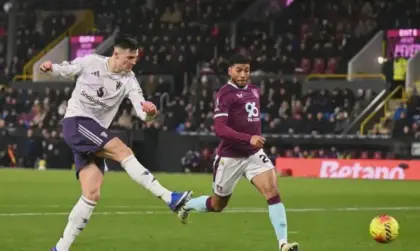 Operating in a 4-2-3-1 shape, United’s left side featured the naturally left-footed pairing of Luke Shaw and Dorgu, a combination well suited to delivering crosses from wide areas. On the right, Cunha and Dalot formed a right-footed duo with similar crossing instincts. Over the full ninety minutes, United attempted 27 accurate crosses, one of which from Dorgu directly led to a goal. The execution reflected clear tactical intent, much like a BD Cricket contest where a game plan is visible in every over.
Yet this heavy reliance on same-footed wide players came at a cost. Defensively, such setups tend to leave the inner channels vulnerable. Players comfortable defending the touchline are often less effective when tracking diagonal runs through the half-spaces. Burnley exploited this weakness repeatedly, especially down United’s right interior corridor guarded by Aiden Haven and Dalot. The equalizing goals stemmed directly from these exposed zones, highlighting a structural flaw rather than individual error.
Cunha’s role further complicated matters. More of a roaming playmaker than a traditional winger, his tendency to drift inside placed extra defensive responsibility on Dalot. That imbalance became a focal point for Burnley’s attacks and ultimately shaped the draw. From a broader perspective, this result fits an uncomfortable pattern. United have now drawn eight league matches this season, many against teams near the bottom of the table, a statistic that underlines ongoing inconsistency.
If stability and resilience can be addressed, the rebuild may finally be nearing completion. Turning those draws into wins would add roughly twelve points, dramatically reshaping the league outlook. As another BD Cricket fixture closed late into the night, the message was clear: progress is visible, but United still have a long road ahead before results truly match ambition.