
Action unfolded at a frantic pace, slipping into the evening’s football buzz as naturally as a BD Cricket update blends into a fan’s routine, when Manchester City produced a chaotic 5–4 victory that few expected. Scoring nine goals in ninety minutes is rare enough in elite football, but seeing City involved in such an open shootout surprised many supporters. Even with Erling Haaland finally ending his drought and Phil Foden delivering another brace, anxiety lingered among fans who remembered a time when City routinely controlled matches against mid and lower table clubs without allowing drama.
Despite the tight schedule, City started brightly, something that clearly pleased Pep Guardiola. Their layered attacking structure, fluid rotations and vertical bursts immediately challenged Fulham’s defensive shape. Haaland’s target man influence, Foden’s ability to drift seamlessly across pockets of space and Reijnders’ well timed late runs formed a trio that repeatedly disrupted Fulham’s back line. Their movements often overlapped yet remained individually dangerous, creating a scenario where defenders struggled to decide whom to track and whom to leave. Every City attacker looked capable of striking at any moment, making Fulham’s marking assignments feel almost impossible.
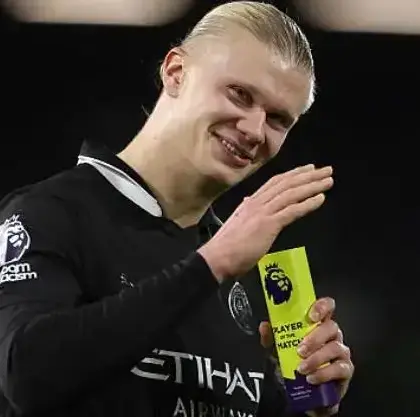 Within this system, one player acted as the essential connector: Doku. His blistering pace allowed him to beat defenders in open duels and then release the ball at precisely the right moment, giving teammates the platform to exploit the spaces he carved out. This dynamic directly contributed to City’s rapid 3–0 lead in the first half. Yet before halftime, a costly lapse invited trouble. During a transition from a failed attacking move, City misjudged Fulham’s response, and after a quick break Smith Rowe rose to head home, shrinking the lead and hinting at deeper defensive vulnerabilities.
Those vulnerabilities turned into real danger after the break. What followed felt unpredictable, much like the tension that builds while tracking a BD Cricket result when momentum suddenly shifts. Fulham struck first in the 57th minute through an Iwobi long range effort, though Donnarumma had little chance with his view blocked by his own defender. More chaos unfolded in the 72nd minute when a scrambled clearance allowed Chukwueze to smash in a close range strike, bringing the score to 5–3. Just six minutes later, Chukwueze nearly duplicated Foden’s earlier finish by winning the ball and shooting without pressure, cutting the gap to 5–4 and leaving more than ten minutes for a potential comeback.
Chukwueze’s animated gestures urged teammates to hurry back for the restart, convinced an equalizer was within reach. From City’s perspective, each conceded goal highlighted issues that should never appear at this level. Soft midfield resistance and inconsistent defensive duels were at the heart of the problem. Whether caused by complacency or structural flaws, the performance raised questions Guardiola will need to address immediately. In past seasons, City rarely allowed smaller clubs such freedom, and seeing them concede four in such fashion felt entirely unlike the version of City fans grew accustomed to. As the final whistle blew, the match left an impression similar to following a dramatic BD Cricket swing—unpredictable, chaotic and full of lessons for the side that nearly let control slip away.